All-in-One Customer Support, Success & AI Intelligence
TeamSupport transforms every customer interaction into account intelligence, helping B2B technology companies protect revenue, strengthen customer relationships, and drive expansion.
Track setup friction, activation progress, flag adoption gaps, and accelerate TTV.
Prioritize accounts by business impact, ticket severity, sentiment, and ARR at risk.
Monitor real-time distress signals and escalation trends to prevent churn and protect NRR.
Action upsell readiness signals from usage and penetration data, customer conversations, and more.
Turn Customer Conversations Into Competitive Advantage
Built on nearly two decades of B2B support expertise. Reimagined around what leadership actually cares about: retention, expansion, and customer intelligence with the same B2B support strength.
Trusted by Thousands of Global Support & Success Leaders










Replace Point Solutions with One Intelligent Platform
Less tech bloat. Fewer vendors. Lower costs. Replace disconnected post-sale tools with one AI-native platform that unifies support, success, onboarding, and customer intelligence around the customer account.
 One Platform. One Data Model. One Customer Record.
 Support teams see tickets.
Revenue teams need signals.
There is a gap between what your support queue shows and what your business needs to know to identify revenue risk. Most support solutions close that gap by routing faster. TeamSupport closes the gap with deep account-level ARR context to turn disconnected customer tools into one cohesive signal and source of truth, revealing the customer risks and opportunities traditional support tools miss.
“Ticket #4821 — login issue, resolved in 12 min.”
“3rd login issue this month from a VP-level contact on a $180K account nearing renewal.”
B2B Operational Excellence, Validated by Customers




Drive Real Business Outcomes
At TeamSupport, we believe the earliest signals of revenue risk and opportunity start inside everyday customer interactions. The problem? They live in disconnected tools.
Automate Operations
Eliminate manual work with AI-powered workflows, playbooks, and ticket automation.
Unify Customer Signals
Connect support, onboarding, success, and product signals in one place.
Interpret Risk & Opportunity
Surface hidden churn risks and expansion opportunities with AI-powered account intelligence and ARR context.
Drive Revenue Outcomes
Act on AI-powered insights to protect renewals, accelerate expansion, and strengthen retention.
Move the Metrics That Matter
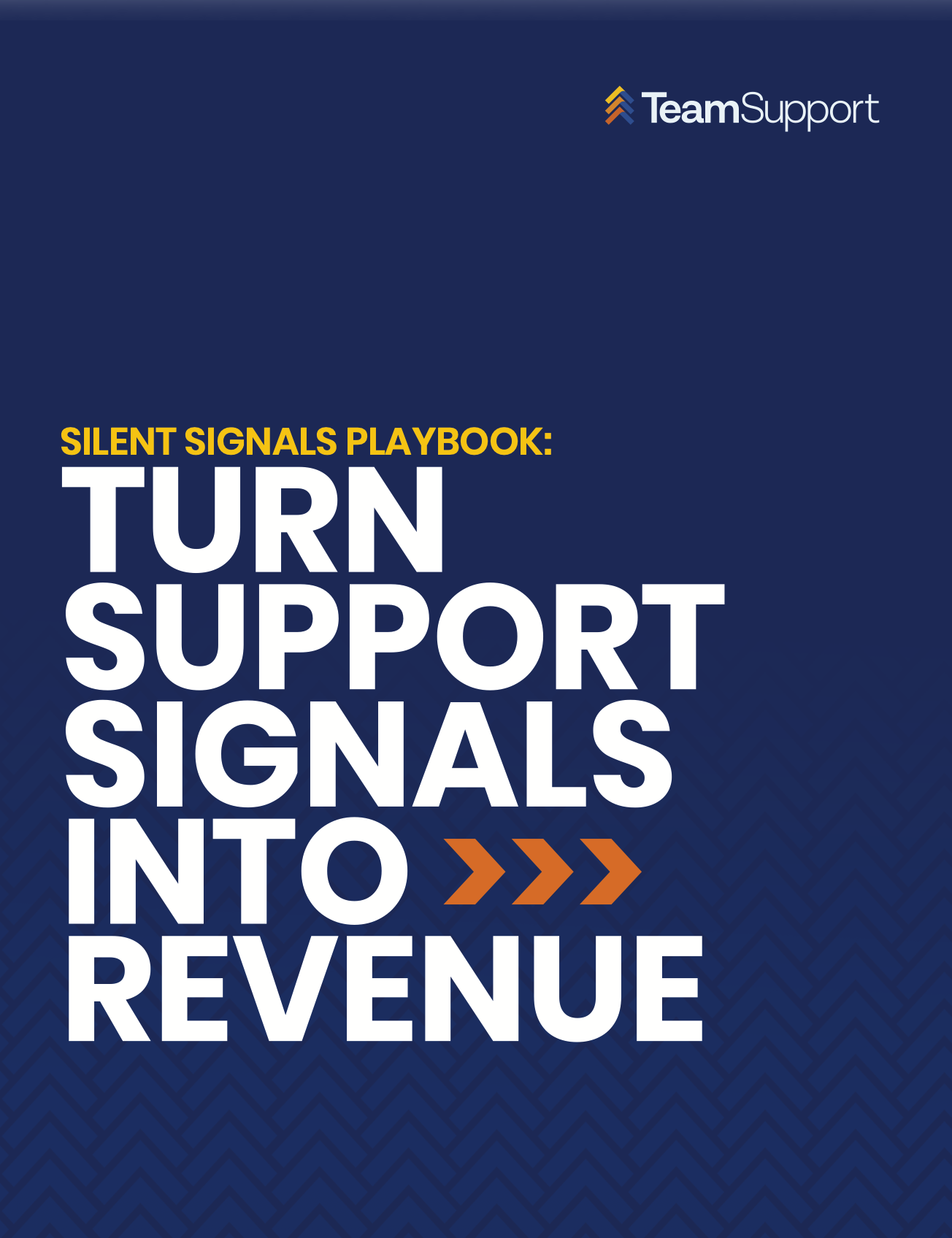
Step-by-step guide to learn how to uncover hidden insights in your support tickets to prevent churn & drive account expansion.
Download PlaybookEvery AI Agent Can Complete a Task. Ours Understands the Customer.
Most AI agents solve individual tasks. TeamSupport's AI-native platform connects every conversation, account, and customer signal to power smarter decisions across the customer lifecycle.
Explore TeamSupport AICustomer Intelligence Insights
Actionable playbooks, guides, and expert insights for Support, Success, and Revenue teams.
Explore All Resources
Your CRM owns the Handshake,
TeamSupport owns the Marriage
Every lasting relationship starts with a conversation. Schedule time with our team.